
Researchers in the US have discovered that a diet enriched with a single amino acid protected mice against intestinal cancer and infections, including the flu and COVID-19.
Changes in amino acids, the building blocks of proteins, have been associated with many diseases. Arginine, an amino acid that can be produced by our body and obtained from protein-rich foods, is reduced in ageing and is the most depleted amino acid in colon cancer and viral infections including influenza and SARS-CoV-2.
Researchers at The Rockefeller University discovered low levels of 414 proteins when cells also had low levels of arginine available, including a protein called MHC-1, which is important for immune cells to find and kill cells affected by viruses or cancer. The team discovered that, because MHC-1 is rich in arginine, the cellular machines that produce proteins were blocked when they tried to produce MHC-1 while having low levels of the amino acid available.
By altering the levels of arginine in mice diets, they found that mice fed an arginine-rich diet developed fewer large intestine cancer tumours and responded better to infections.
“Not only did mice with an arginine-rich diet have milder symptoms from viral infections, giving the mice arginine after influenza infection improved their outcomes too,” said Qiushuang Wu, first author of the study published in Cell.
"We're also investigating whether making dietary changes in other amino acids has beneficial effects in a variety of disease contexts,” added Sohail Tavazoie, leader of the study.
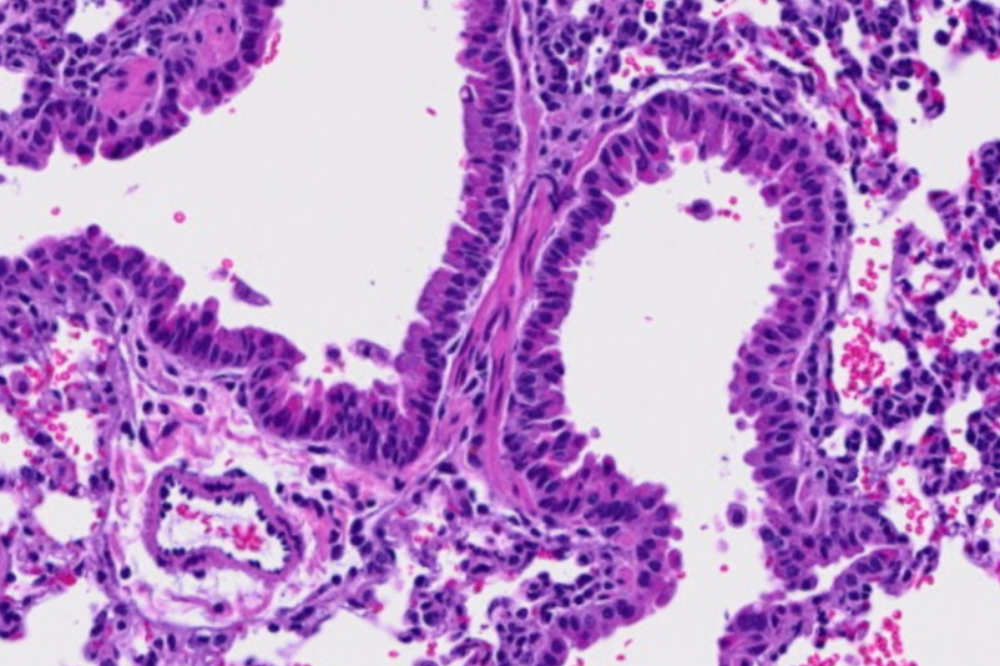
Lung tissue from a mouse infected with a viral infection fed a arginine-poor diet. CREDIT: The Rockefeller University