
Researchers in the US have discovered that changes in gene expression associated with ageing are distributed unevenly in mouse hearts, improving understanding of cardiovascular health.
While it is known that ageing drives inflammation and scar formation in the heart, it’s not clear how these changes are distributed or how different cell types contribute, since previous studies often focus on the muscle.
Researchers at the EARA member Jackson Laboratory (JAX), Maine, investigated thousands of heart cells of different types from young (6 months old) and aged (2 years old) mice. By analysing the genes expressed in individual cells combined with maps of the heart, they discovered that genetic markers of inflammation and scarring associated with ageing are found in immune cells and also fibroblasts, connective tissue cells that contribute to scar formation, and concentrate in what they called “hotspots”.
The team found these changes around the first segment of the aorta, the body’s largest blood vessel, and the aortic valves, tissue flaps that open to let blood enter the aorta and close to prevent backflow.
"Valve replacement is common in older adults, and one of the big questions is how much of the underlying damage is driven by aging itself," said JAX researcher Aleksandra Aljakna Khan, author of the study published in Aging Cell. "Because all of the mice in our study lived in the same environment and ate the same diet, we were able to isolate the effects of aging and show that aging alone can initiate some of these changes in the valves and aorta."
Current research is examining how exercise, diet and disease influence the susceptibility to heart disease later in life.
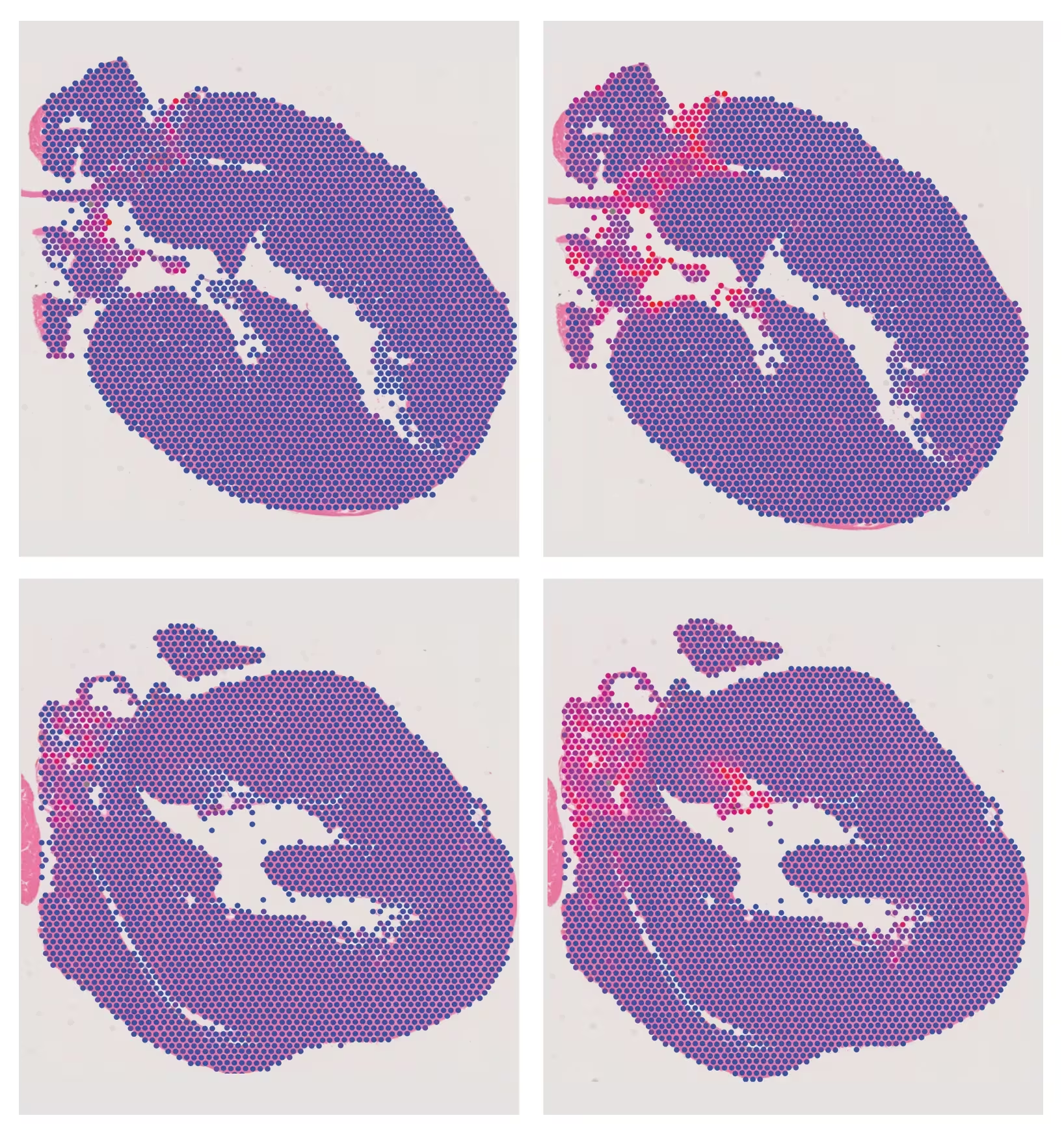
Maps of young (top) and aged (bottom) mouse hearts showing where immune cells called macrophages (left) and fibroblasts (right) are most abundant. CREDIT: JAX