
The Dutch government has confirmed that funding for non-human primate (NHP) research at EARA member the Biomedical Primate Research Centre (BPRC) will continue under the existing agreement, while gradually increasing the proportion of the subsidy allocated to the development of alternatives to 30% by 2030.
In a letter to the Parliament, the Minister of Education, Culture and Science clarified the government’s position following the approval of the 2026 budget for Education and Science including an amendment that would end public funding for the BPRC by 2030, which was later reversed.
The Minister said the Netherlands cannot currently do without NHP research if it is to avoid compromising research into life-threatening diseases and infectious diseases that threaten public health and reiterated its preference for using primates bred at the BPRC rather than importing animals, citing the centre's high animal welfare standards and the scientific advantages of maintaining a dedicated breeding colony.
The letter also states that recent geopolitical developments have reinforced the importance of maintaining national research capacity and the importance of strengthening European collaboration on NHP research, welcoming the outcomes of the PrimeMeet conference, organised by the BPRC with the support of EARA and others, where representatives of the primate research community committed to strengthening cooperation.
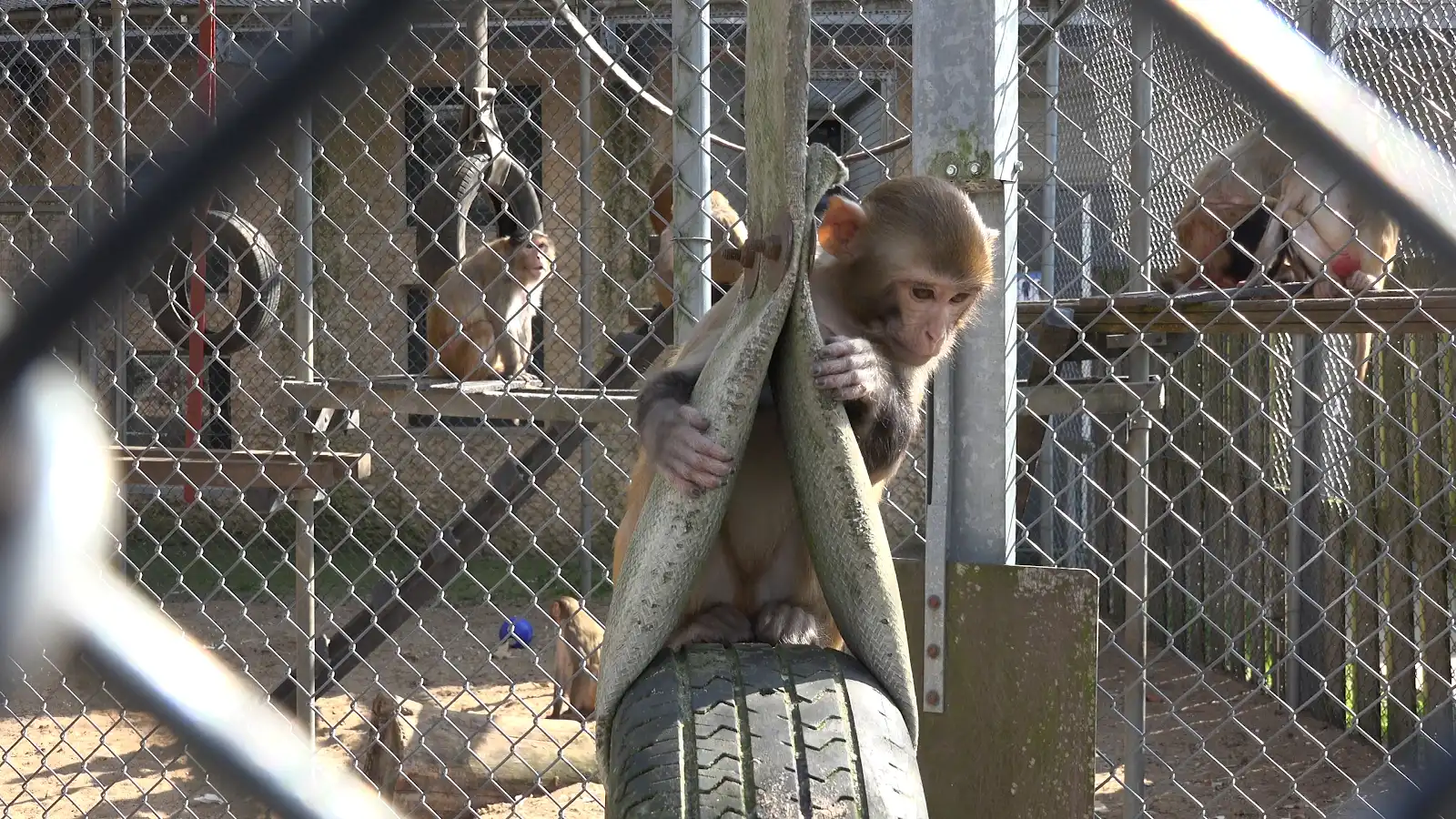
Rhesus macaque swinging on an old tire. CREDITS: BPRC